

Playing in the Sandbox
The IDC predicts that the global datasphere (the amount of data created, captured, and replicated in any given year) will grow to 175 zettabytes by 2025, and nearly 30% of the world’s data will require real-time processing. But, how big is a zettabyte? To answer that, let’s pretend that you are standing on a beach.
In 1980 Carl Sagan famously estimated that there are about seven quintillion, five quadrillion (7.005×10²⁰) grains of sand covering the earth’s beaches.
Unfortunately we cannot assume a finite number of beaches because (surprise!) there is no standard definition for a beach. Some questions considered here are: What is the minimum surface area of a beach? Is it still a beach if it’s completely covered at high tide? etc. So we take a slightly different approach…
We know that Sagan used coastlines to guide his methodology, of which NASA approximates as 620,000km (620 million meters) on Earth. Now let’s change the analogy a bit to help confine what we’re imagining. Instead of a beach, let’s say you are in a small/medium 2m x 2m x 30cm sandbox (whose volume calculates out to 1.2m3). After doing a bit of conversion, we learn that 620,000km equates to roughly 1.55 × 10¹¹ cubic meters (using a width of 50m and a depth of 5m as dummy variables).
Next, we follow the assumption that there are 7.005×10²⁰ grains of sand across all of NASA’s approximated coastlines. This gives us ~4.5 × 10⁹ grains of sand per cubic meter, or 4,519,354,838 (~4.5 billion) grains/m3 for those of you still following along. Recall that we’re standing in 1.2m3 of sand, making this part straight forward: 1.2 x 4.5 = 5.4 billion grains [of sand in our sandbox].
Here comes the meta-analogy1 and the most crucial part: Let’s say that a byte of data is represented by a grain of sand. There are sextillion (1 x 10²¹) bytes in a zettabyte. This means that our sandbox would need to be stacked on top of itself 221 billion times to hold the amount of sand that we’ve said equates to 1 zettabyte of data! Having a hard time picturing that? Me too; let’s take this a step further.
Our sandbox is 0.3m tall. If we need to stack it on top of itself 221 billion times to reach a zettabyte, the final structure would be 66.3 billion meters (217.5 billion feet) tall! Which conveniently, is very close to the distance between Earth and Mars (~63.3 billion meters). And again, that’s just one zettabyte.
If we were to multiply that number by 175 to represent the IDC’s actual 2025 projections, it would be much closer to 1.2 trillion meters (3.8 trillion feet) tall! Our brains have already been working overtime to get us this far, but are you able to imagine the distance between the Earth and Saturn? Because that distance (1.46 trillion meters) is comparable to the new height of our sandbox.
It’s no easy task, but if you wanted to picture the amount of data the IDC projects for the 2025 global datasphere, that is “The amount of data created, captured, and replicated in any given year across the world” (Seagate, 2019):
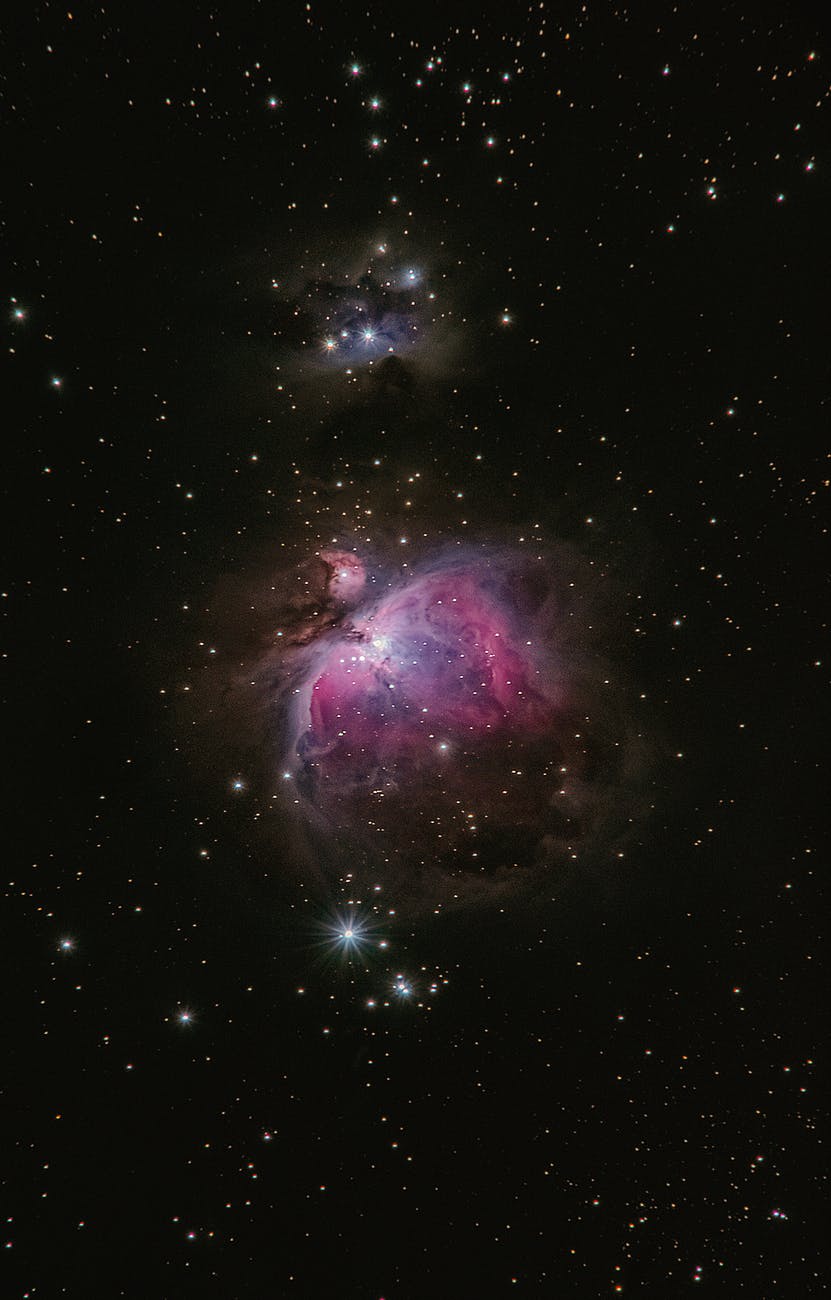
Try to imagine a very tall children’s sandbox – whose grains of sand are our bytes of data – stretching all the way from Earth’s surface to Saturn’s rings.
That is the height of 175 zettabytes of data.
Footnotes & References
1Is a meta-analogy actually a literary device? I’m not sure – I may have just contrived something awful and pretentious; you have my sincerest apologies.
DOMO. (2019). Data Never Sleeps 7.0 [Infographic]. Retrieved from https://www.domo.com/learn/data-never-sleeps-7.
NASA. Living Ocean. Retrieved from https://science.nasa.gov/earth-science/oceanography/living-ocean.
NASA. Mars in our Night Sky. Retrieved from https://mars.nasa.gov/all-about-mars/night-sky/close-approach/.
NASA. Saturn. Retrieved from https://solarsystem.nasa.gov/planets/saturn
Seagate. (2019). Data Age 2025. Retrieved from https://www.seagate.com/au/en/our-story/data-age-2025/.
 Maria DaRocha